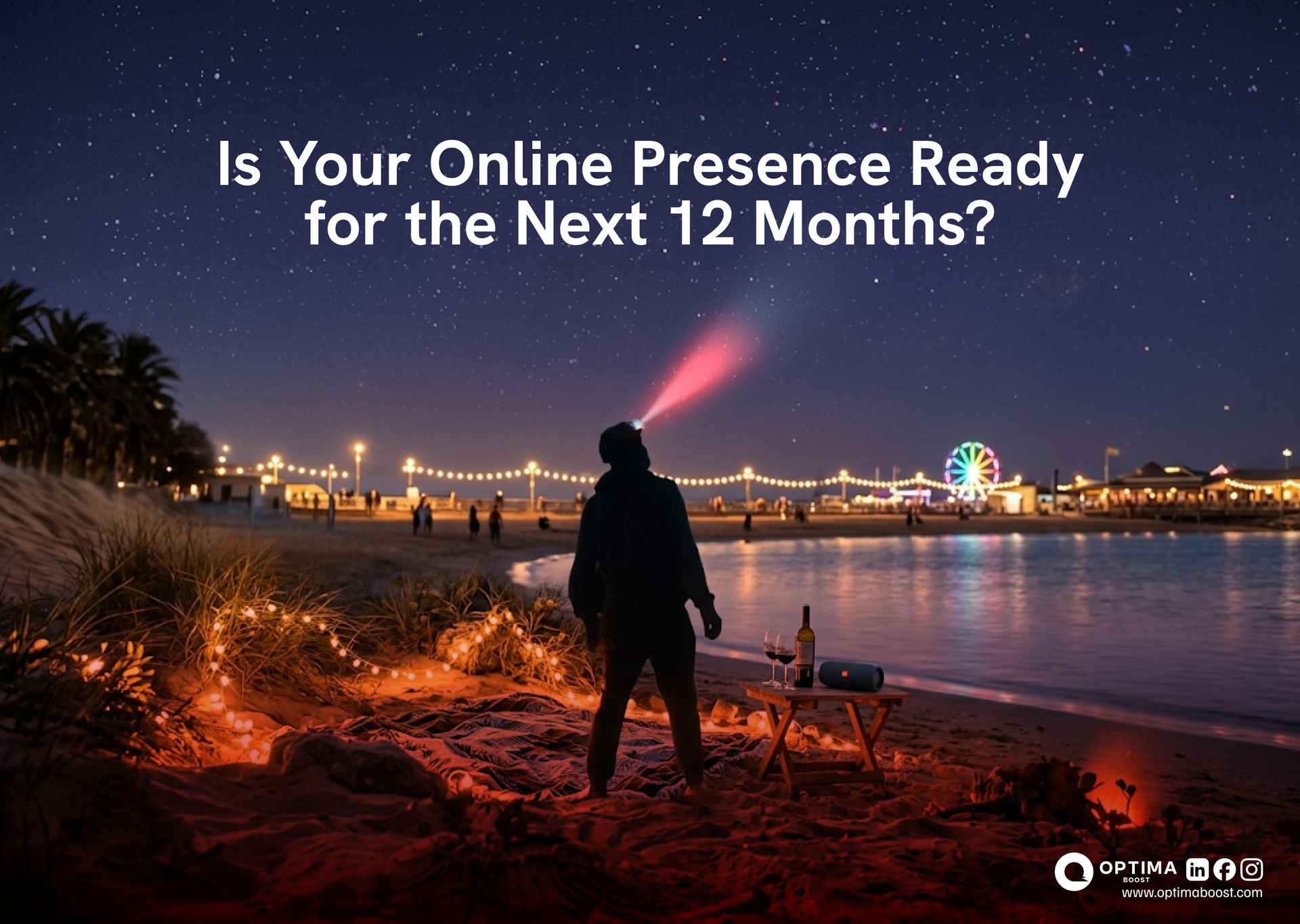
Is Your Online Presence Ready for the Next 12 Months?

April 26, 2026

The last year has been full of change online—AI tools everywhere, privacy updates, new ad features, shifting algorithms.


If you’re like most business owners, you’ve probably felt at least one of these:

  • Your website feels a little outdated compared to your competitors.
  • Your SEO results are inconsistent or hard to understand.
  • Your ads are getting more expensive, but not clearly more effective.
  • You’re not sure what to fix first.


The good news: you don’t need a total reinvention. You need a simple, honest checkup on whether your online presence is built for the next 12 months—not the last 12.


In this article, we’ll walk through three pillars of a future‑ready online presence—website, SEO, and ads—and finish with a 30‑day action plan you can actually follow.

The Pace of Change Online Isn’t Slowing Down

Every year, it gets:

  • Easier for customers to compare you with competitors.
  • Harder to stand out with a generic website and random content.
  • More expensive to “wing it” with ads.


At the same time, people expect more from your online presence:

  • Sites that load fast and look good on any device.
  • Clear messaging that tells them exactly what you do and who you help.
  • Simple paths to book, call, or request a quote.


If your online presence hasn’t really changed in a couple of years, this is your sign. The question isn’t “Do I need to be everywhere?” It’s “Is what I already have actually set up for how people behave today?”

The 3 Pillars of a Future‑Ready Online Presence

Think of your digital presence as a simple system built on three pillars:


1. Website – Your home base
This is where people decide whether they trust you and whether to take the next step. A future‑ready website is:

  • Fast, mobile‑friendly, and easy to navigate.
  • Built around clear offers and services, not just a pretty homepage.
  • Focused on turning visitors into leads or customers.


2. SEO – Your organic visibility
SEO makes sure your best pages can actually be found when ideal customers search for solutions. Future‑ready SEO is:

  • Built around topics and services your clients care about.
  • Supported by helpful content that answers real questions.
  • Structured so search engines understand your pages and can rank them.


3. Ads – Your traffic accelerator
Ads (Google, Meta, etc.) put your offers in front of the right people faster. Future‑ready ads are:

  • Pointed to specific, relevant landing pages—not just your homepage.
  • Matched to a clear message and strong call to action.
  • Measured against real business outcomes (leads, bookings, sales).


When these three pillars work together, you’re no longer guessing. Your website converts, your SEO attracts, and your ads amplify.


How to Align Your Website, SEO, and Ads Into One Simple System

Most businesses treat their website, SEO, and ads like three separate projects—often handled by different people who barely talk to each other. That’s how budgets get wasted and results stay confusing.


A better approach is to see everything as one simple system:

1. Start with your offers

  • What are your top 1–3 services you want to sell most this year?
  • Do they each have a dedicated, focused page on your website?
  • Is it clear who they’re for, what’s included, and how to get started?


2. Build or refine key pages on your website

  • Create or update service pages that speak directly to your ideal client’s problems and desired outcomes.
  • Make sure every key page has a clear next step: book a call, request a quote, fill out a form.


3. Align your SEO around those pages

  • Research simple, realistic keywords related to each service.
  • Optimize titles, headings, and meta descriptions around those topics.
  • Add supporting content (like FAQs or short blog posts) that link back to your main service pages.


4. Point your ads at the same high‑intent pages

  • Instead of sending ad traffic to your homepage, send it to the specific service or offer page that matches the ad.
  • Keep your ad message consistent with the headline and content on the page.
  • Track the actions that matter most: leads, bookings, or purchases—not just clicks.


When everything points in the same direction, even small improvements compound over time.

A 30‑Day Action Plan to Get Ahead

You don’t have to fix everything overnight. Use this 30‑day plan to move from “we’ll get to it someday” to real progress next month.


Week 1 – Audit and Clean Up

  • List your top 1–3 services or offers.
  • Visit your website as if you were a new visitor. Is it obvious what you do and who you help?
  • Remove or update obviously outdated pages, images, or copy.
  • Check basic health: page speed, mobile experience, broken links.


Week 2 – Strengthen Your Key Pages

  • Make sure each main service has its own page.
  • Clarify your headlines: who you help, what you do, and the outcome you deliver.
  • Add or refine calls to action (buttons, forms, booking links).
  • Add 2–3 short FAQs to each page to handle common objections.


Week 3 – Align SEO Basics

  • Choose 1–3 realistic keyword phrases for each key page (for example, “website design for coaches,” “local SEO for dentists”).
  • Update your page titles, meta descriptions, and headings to reflect those phrases naturally.
  • Add internal links from blog posts or other pages to your main service pages.


Week 4 – Launch or Refine Ads

If you already run ads:

  • Pause any campaigns sending traffic to weak or generic pages.
  • Focus your budget on campaigns that send visitors to your improved service pages.

If you’re starting fresh:

  • Launch 1–2 simple campaigns promoting your strongest offer.
  • Set a realistic daily budget and track leads, not just clicks.

At the end of the week, review results and note what you’ll tweak next.


Small, focused improvements like these can completely change the way your online presence performs over the next 12 months.

Ready to Future‑Proof Your Online Presence?

If reading this makes you realize your website, SEO, and ads haven’t really been working together, you’re not alone. Most businesses grow in pieces—and their online presence ends up just as scattered.


You don’t need a complicated system. You need a clear, connected one.


If you’d like help:

  • Share your website URL
  • Tell me your top 1–3 services you want to grow this year
  • Let me know whether you’re currently using SEO, ads, both, or neither


I’ll give you a straightforward view of:

  • Where your website, SEO, and ads are helping—or holding you back.
  • The highest‑impact fixes to make in the next 30 days.
  • How we can work together to build a simple, future‑ready system that supports your business for the next 12 months and beyond.

Recent Posts

Two people stand on a small beach facing a purple wall covered in security cameras, with a sandcastle and beach items.
April 19, 2026
Privacy rules are changing how websites and ads track visitors. Learn what this means for your small business and how to adjust your website, SEO, and ads so you can still get clear results—without creepy tracking.

A small, white toy robot wearing a straw hat, a floral lei, and striped shorts, standing on a dark kitchen countertop.
April 12, 2026
AI is transforming websites, SEO, and online ads—but it doesn’t replace your brand. Learn how small businesses can use AI tools to get better results from their website, search traffic, and advertising without losing the human touch.
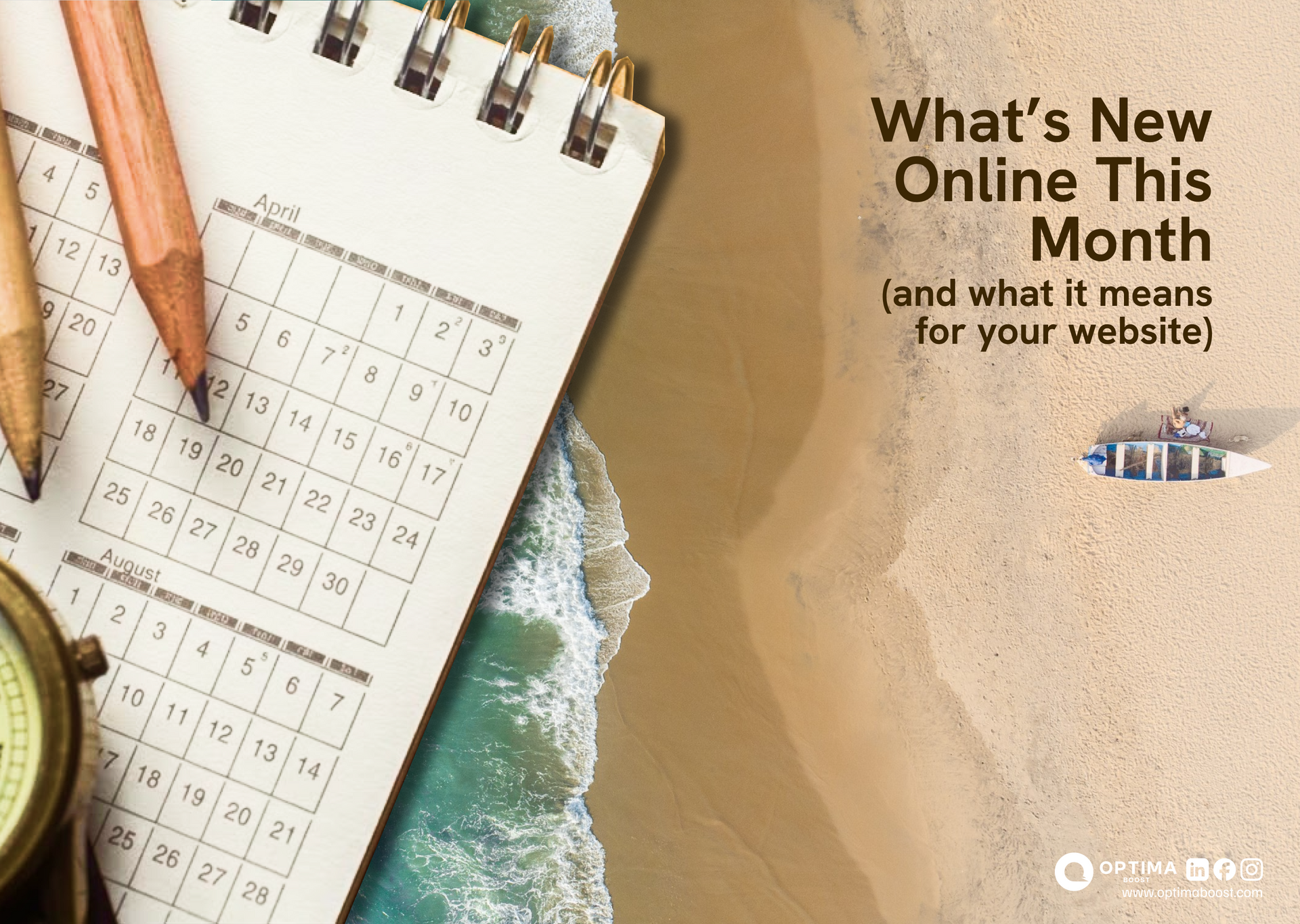
Split view of a spiral calendar on sand by the ocean, with the text
April 2, 2026
Keep your business ahead with our April digital roundup. Learn how new SEO, ads, and website trends impact your growth and get simple steps to stay competitive.

March 25, 2026
Local competition continues to grow as more businesses invest in their online presence. In 2026, customers are relying even more on search engines to find nearby services quickly and confidently.

March 19, 2026
A website should do more than look attractive—it should actively guide visitors toward becoming customers. Many small business websites receive traffic but struggle to convert that traffic into leads or sales.

March 12, 2026
Mobile devices have become the primary way customers browse, research, and connect with businesses. If your website is difficult to use on a smartphone, you are likely losing valuable opportunities.

March 5, 2026
Your website is often the first impression customers have of your business. Poor design can quickly damage trust and credibility, even if your services are excellent. In competitive markets, a weak online presence can cost you valuable opportunities and long-term growth.
February 26, 2026
Content marketing allows small businesses to attract customers by providing valuable information instead of relying only on advertising. By answering questions and offering helpful insights, businesses can build trust and generate consistent website traffic.
Red glowing line graph trending upward against a dark background.
February 1, 2026
Websites are no longer just digital brochures. Today, they are becoming smarter, faster, and more personalized thanks to AI driven features built directly into modern web design.
Two people analyzing data on a laptop with glowing red accents.
January 18, 2026
San Jose businesses are feeling a quiet shift online. It’s not about flashy redesigns or chasing trends. It’s about staying visible, credible, and competitive as customer behavior changes faster than ever.
Show More

Share this article

Recent Posts

Two people stand on a small beach facing a purple wall covered in security cameras, with a sandcastle and beach items.
April 19, 2026
Privacy rules are changing how websites and ads track visitors. Learn what this means for your small business and how to adjust your website, SEO, and ads so you can still get clear results—without creepy tracking.
A small, white toy robot wearing a straw hat, a floral lei, and striped shorts, standing on a dark kitchen countertop.
April 12, 2026
AI is transforming websites, SEO, and online ads—but it doesn’t replace your brand. Learn how small businesses can use AI tools to get better results from their website, search traffic, and advertising without losing the human touch.
Split view of a spiral calendar on sand by the ocean, with the text
April 2, 2026
Keep your business ahead with our April digital roundup. Learn how new SEO, ads, and website trends impact your growth and get simple steps to stay competitive.
March 25, 2026
Local competition continues to grow as more businesses invest in their online presence. In 2026, customers are relying even more on search engines to find nearby services quickly and confidently.
March 19, 2026
A website should do more than look attractive—it should actively guide visitors toward becoming customers. Many small business websites receive traffic but struggle to convert that traffic into leads or sales.
March 12, 2026
Mobile devices have become the primary way customers browse, research, and connect with businesses. If your website is difficult to use on a smartphone, you are likely losing valuable opportunities.
March 5, 2026
Your website is often the first impression customers have of your business. Poor design can quickly damage trust and credibility, even if your services are excellent. In competitive markets, a weak online presence can cost you valuable opportunities and long-term growth.
February 26, 2026
Content marketing allows small businesses to attract customers by providing valuable information instead of relying only on advertising. By answering questions and offering helpful insights, businesses can build trust and generate consistent website traffic.
Red glowing line graph trending upward against a dark background.
February 1, 2026
Websites are no longer just digital brochures. Today, they are becoming smarter, faster, and more personalized thanks to AI driven features built directly into modern web design.
Two people analyzing data on a laptop with glowing red accents.
January 18, 2026
San Jose businesses are feeling a quiet shift online. It’s not about flashy redesigns or chasing trends. It’s about staying visible, credible, and competitive as customer behavior changes faster than ever.
Show More